
Green tea study highlights how even small amounts of nutrients can reap substantial health benefits
 A new study on green tea (Camellia sinensis) has successfully demonstrated a unique mechanism in biology where minute amounts of certain nutrients can provide substantial benefits.
While the study focused on epigallocatechin gallate (EGCG)—the primary antioxidant in green tea—the research has broad implications in the field of nutrition. The findings will help scientists better understand the viability of “small doses” when it comes to other nutrients and nutritional supplements in general.
The groundbreaking idea
The study, published in Frontiers in Nutrition in July 2026, investigated a long-standing question in nutrition: If EGCG from green tea has low bioavailability, how do small quantities of it provide such significant health benefits?
The researchers suggested that EGCG doesn’t necessarily need to be absorbed into the bloodstream to work. Instead, EGCG acts as a “metabolic trigger” through the body’s sensory systems.
This supposition was, indeed, validated by the study.
The gut is smarter than we thought
For decades, nutritional science has operated on a pharmacological model: If a nutrient is not in the blood, it’s not doing anything. However, the new study proved that the gastrointestinal tract is not just an absorption pipe, but a sophisticated sensory organ.
If a compound (like certain polyphenols or bitter herbs) triggers a G-protein-coupled receptor (like a bitter taste receptor) in the gut, that signal travels to the brain via the vagus nerve instantly. It can also instantly trigger a hormone release , such as GLP-1 or PYY.
This signaling produces systemic effects (like improved insulin sensitivity or reduced inflammation). And all this “magic” happens without the compound ever needing to enter the bloodstream in high concentrations!
In short, the study provides a game-changing perspective.
To date most scientists have been looking at nutrition through a “pharmacological” keyhole—only counting what makes it into the blood. However, the body was actually using the entire gut as a sophisticated “control panel.”
How the study was conducted
The study, Sensory Signaling Mediates the Systemic Metabolic and Neurological Effects of Epigallocatechin Gallate, was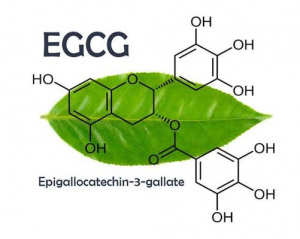 designed to prove that EGCG doesn’t need to be fully absorbed into the bloodstream to produce health benefits—it just needs to “talk” to the gut.
To test this, the researchers used a clever combination of two animal studies that utilized both genetic and dietary models to isolate the effect of bitterness.
Study 1
The core of the study relied on “Skn-1a−/− mice.” These mice lack a specific gene that allowed the researchers to create a model that was essentially “blind” to bitter taste signals in the gut. If EGCG worked by being absorbed into the blood, it should still have an effect on these mice. If it worked through sensory signaling, the effect would disappear.
The results of the study showed that the effect did, indeed disappear—meaning the green tea EGCG was effective via sensory signaling.
Study 2
To corroborate/reinforce the “sensory signaling” conclusion the researchers conducted a six-week metabolic study utilizing rats.
Since measuring individual food intake in mice can be difficult and stressful (which can skew metabolic data), the researchers used male Wistar rats for what the researchers termed the “chronic, long-term portion” of the dual-study project.
To simulate metabolic syndrome, the rats were fed a High-Fat/High-Sucrose Diet to induce insulin resistance and fat accumulation.
These rats were then given repeated oral treatments of EGCG to see if the compound could reverse or mitigate the damage caused by the poor diet.
Once again, the results were positive with regard to EGCG’s effectiveness.
The “Smoking Gun” finding
The most critical finding occurred when the researchers compared the wild-type mice (with functioning bitter sensors) to the Skn-1a−/− mice (without them).
The metabolic and neurological improvements seen in the wild-type mice were completely abolished in the Skn-1a−/− mice. This provided the definitive proof: The health benefits of EGCG were not caused by the EGCG reaching the blood, but by the EGCG stimulating those specific bitter taste receptors in the gut—receptors which then sent a “signal” to the brain and body to regulate metabolism!
The emerging field of sensory nutrition
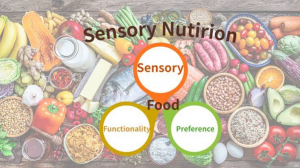 The green tea study is notable in the emerging field of “sensory nutrition.” Sensory nutrition is an interdisciplinary area that formally gained momentum following a 2019 National Institutes of Health workshop. It is built on the observation that the body’s gut-level sensory systems play a much more active role in systemic metabolic health than traditional “bloodstream-only” models previously accounted for.
Before 2019 researchers were already studying how taste and smell influenced appetite and nutrition, but they often worked in separate spheres: sensory scientists looked at “liking” (palatability), while nutritionists looked at “absorption” (bioavailability).
Supplement advocates are right again!
Since the current EGCG study helps explain how tiny amounts of nutrients can quickly elicit profound health benefits, it is expected that similar research on other nutrients will soon follow—along with expanded human trials.
Scientists have already suggested that prime nutrients to be examined next include curcumin, berberine, capsaicin, and bitter herbs like dandelion and wormwood.
It’s an exciting time for anyone who feels the supplements they’re taking are providing a benefit yet has been told by a “health expert” that the small amounts of powder in a little gelatin capsule couldn’t possibly be enough to provide health benefits. Well, that so-called “health expert” is sorely mistaken! Everything we do, including the “small things” can either prevent or promote “the best performance of our life!”
God bless,
DrB
Primary source: Frontiers in Nutrition, July 2026.