Vitamin E: The critical nutrient that 5 billion people don’t get enough of
An eye-popping 2024 study, published in The Lancet Global Health, uncovered a startling truth about global malnutrition: Billions of people worldwide are not getting enough of seven different essential nutrients in their diets. One of those nutrients is Vitamin E.
According to the research team, led by experts from the Harvard T.H. Chan School of Public Health and the University of California-Santa Barbara, over 5 billion people worldwide don’t receive enough Vitamin E in their diets. That’s about 67% of the world’s population.
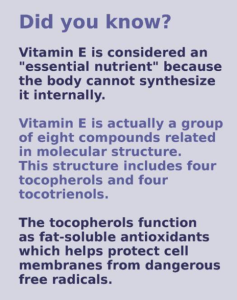
The researchers made their determination by analyzing dietary data from 185 countries, covering 99.3% of the global population.
Until recently Vitamin E didn’t receive much attention. While Vitamin E started to be included on multivitamin products decades ago, stand-alone Vitamin E products were rare. During this period health experts and consumers alike targeted the major “disease-fighting vitamins” like vitamins A, C and D.
But Vitamin E has finally been noticed. It has moved up a few notches on the “chart of importance.” This has happened, in large part, due to a better understanding of antioxidants in the modern era.
Decades ago, science understood vitamins mostly as individual keys to prevent specific diseases. However, now that molecular biology has mapped out how oxidative stress and chronic low-grade inflammation drive long-term cellular aging, Vitamin E is one of the “antioxidant nutrients” that has moved from the background to center stage.
Today, many health consumers are focused on cardiovascular and neurological challenges. And Vitamin E, as a primary fat-soluble defender of cell membranes, is proven to fight the oxidative damage that is linked to cardiovascular and neurological decline.
Research bears this out: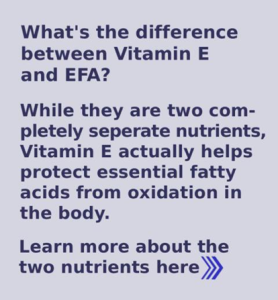
Even before the turn of the century, in 1998, researchers had already established that Vitamin E reduced susceptibility to atherosclerosis—or hardening of the arteries—due to its ability to inhibit the oxidation of low-density lipoprotein.
Then, in 2010, a study published in JAMA Neurology reported that consuming more Vitamin E through the diet was associated with a lower risk of dementia and Alzheimer’s disease.
That same year a study conducted by Swedish researchers found higher blood levels of Vitamin E reduced the risk of Alzheimer’s disease.
In a study published in Redox Biology in 2019, researchers from Baker Heart and Diabetes Institute reported that Vitamin E appeared to prevent muscle damage following a heart attack.
Challenges of getting enough Vitamin E through the diet
At the same time researchers are documenting the health benefits of Vitamin E, scientists are also documenting the reason for world-wide deficiencies: modern food processing.
Rich natural sources of Vitamin E include wheat germ, sunflower seeds, almonds, hazelnuts, and cold-pressed plant oils. Modern industrial refining processes for grains and seed oils often strip away a significant portion of the natural Vitamin E content. As global diets have shifted toward more processed foods and staples that lack these components, baseline dietary intake has dropped.
The result is five billion people failing to get an adequate intake of Vitamin E!
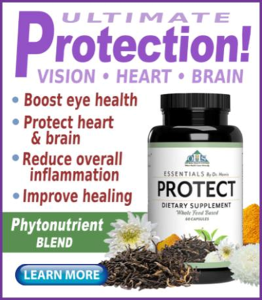
We recommend Vitamin E in Essential Protect especially for our clients wanting to improve or maintain their eyes, heart, or brain. After all, at ProActive Wellness we’re committed to helping our clients and patients experience, “the best performance of their life!”
God bless,
DrB
Sources: TheLancet.com, Science Daily, JAMA Neurology, Journal of Alzheimer’s Disease, Redox Biology, Wikipedia (Vitamin E).