
Two bad habits that contribute to your acid indigestion
America is suffering a virtual “acid epidemic.” Public health data estimate that roughly 20% of the U.S. population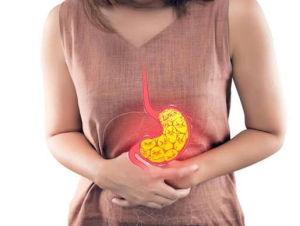 experiences chronic acid indigestion or GERD. Too little acid is usually the problem, not too much acid. Many unhealthy habits contribute to acid indigestion, but most experts would rank Eating Large Meals and Eating Late Meals as the two worst offenders.
These are easy to remember as “The two ELMs.” Understanding the mechanics helps avoid the consequences, so here is a breakdown of why these two habits cause such predictable problems.
Eating Large Meals
When a large meal is eaten, the stomach is stretched past its intended capacity. This causes a chain reaction of mechanical failures.
- First, the lower esophageal sphincter is compromised. The Lower Esophageal Sphincter is like a trapdoor at the top of the stomach. When the stomach is overfilled, the internal pressure pushes directly upward against this valve. Eventually, the pressure becomes high enough that the valve is forced open–referred to as “incompetent.” This allows acidic stomach contents to splash into the esophagus.
- Secondly, large meals cause delayed gastric emptying. The stomach has a specific rate at which it processes food. A massive volume of food creates a “traffic jam.” The more food you ingest, the longer it takes for the stomach to churn it into a liquid state and move it into the small intestine.
This means that highly acidic contents are sitting in the stomach for much longer, increasing the window of time during which a person is susceptible to reflux.
- Finally, large meals cause a “signaling bottleneck.” The stomach needs a specific level of acidity to signal the next stage of digestion. When a very large meal is eaten, the sheer volume can dilute the natural stomach acid, making it harder to reach that “acidic trigger”—further slowing down the entire digestive process.

Eating Late Meals
When a person eats late, they’re essentially trying to defy the laws of physics by removing the biggest digestive ally a person has: gravity.
During the day—when a person is standing or sitting upright—gravity naturally pulls stomach contents downward, keeping them far away from the lower esophageal sphincter. However, when a person lies down after a late meal, the stomach and the esophagus move into a horizontal plane. The acid is no longer held at the bottom of the stomach; instead, it is now sitting directly against the lower esophageal “trapdoor.”
Next, in the Eating Late Meals event chain is decreased motility during sleep.
During normal sleep, the digestive tract shifts into a “maintenance” mode. The stomach’s churning contractions, known as peristalsis, become less frequent and less powerful. So, when a person goes to bed with a stomach still full of food, that food essentially sits almost motionless. The stomach contents sit stagnant—marinating in acid for hours—waiting for the stomach’s sluggish nighttime pace to eventually move it along.
Any person who has laid in bed with a burning stomach sensation after eating a late meal has experienced this “decreased mobility” problem.
The final issue in the eating late chain reaction is the “silent reflux” risk.
How it happens: Normally, a person swallows frequently. This is the body’s natural defense mechanism for clearing the esophagus and creating saliva (saliva is alkaline and neutralizes acid). However, when a person is sleeping, the “swallow reflex” is suppressed–meaning the possibility of an esophageal acid leak is increased.
This situation is called “silent reflux” because it sits on the esophageal lining for a long time, causing damage that is not felt until a person wakes up with a sour taste or scratchy throat.
Besides increasing the risk of heartburn/acid indigestion, it’s also worth noting that eating late is disruptive of quality sleep in general. A study conducted on university students in 2020 found that eating anything within three hours of bedtime increased the chances of waking up throughout the night by up to 40 percent.
Compounding the problem
The reason that Eating Large Meals and Eating Late Meals are so concerning is that they often work in tandem to compound one another.
If a person eats a large meal (which creates high pressure and long digestion times), then also eat it late at night (which removes the help of gravity and slows motility), that person creates the perfect storm: A high-pressure, acidic soup sitting stagnant against the esophageal valve for almost the entire duration of the sleep cycle.
Supplemental support
 If you’re experiencing acidity following meals, rather than neutralizing your stomach’s valuable stomach acid with over-the-counter meds, why not consider a different approach: Utilize the nutrients that support proper digestion—nutrients like Betaine HCL, Pepsin and Zinc!
You’ll find these nutrients in Optimal Gastric Prime HCL. We recommend this to our clients as its not something you’ll need for the rest of your life. It’s designed to correct the cause of the digestive problem and once corrected it will no longer be needed. Correcting or eliminating the problem or problems /s the action needed for one to experience, “the best performance of your life!”
God bless,
DrB
Sources: MayoClinic.org, Harvard.edu, Johns Hopkins Medicine, ClevelandClinic.org, Wikipedia (esophagus).